Conversion Rate Optimisation UK: How to Turn Your Existing Traffic into Revenue
Most UK businesses chase more traffic when the real problem is that existing visitors are not converting. CRO fixes the leak in your funnel so the traffic you already have starts paying its way.
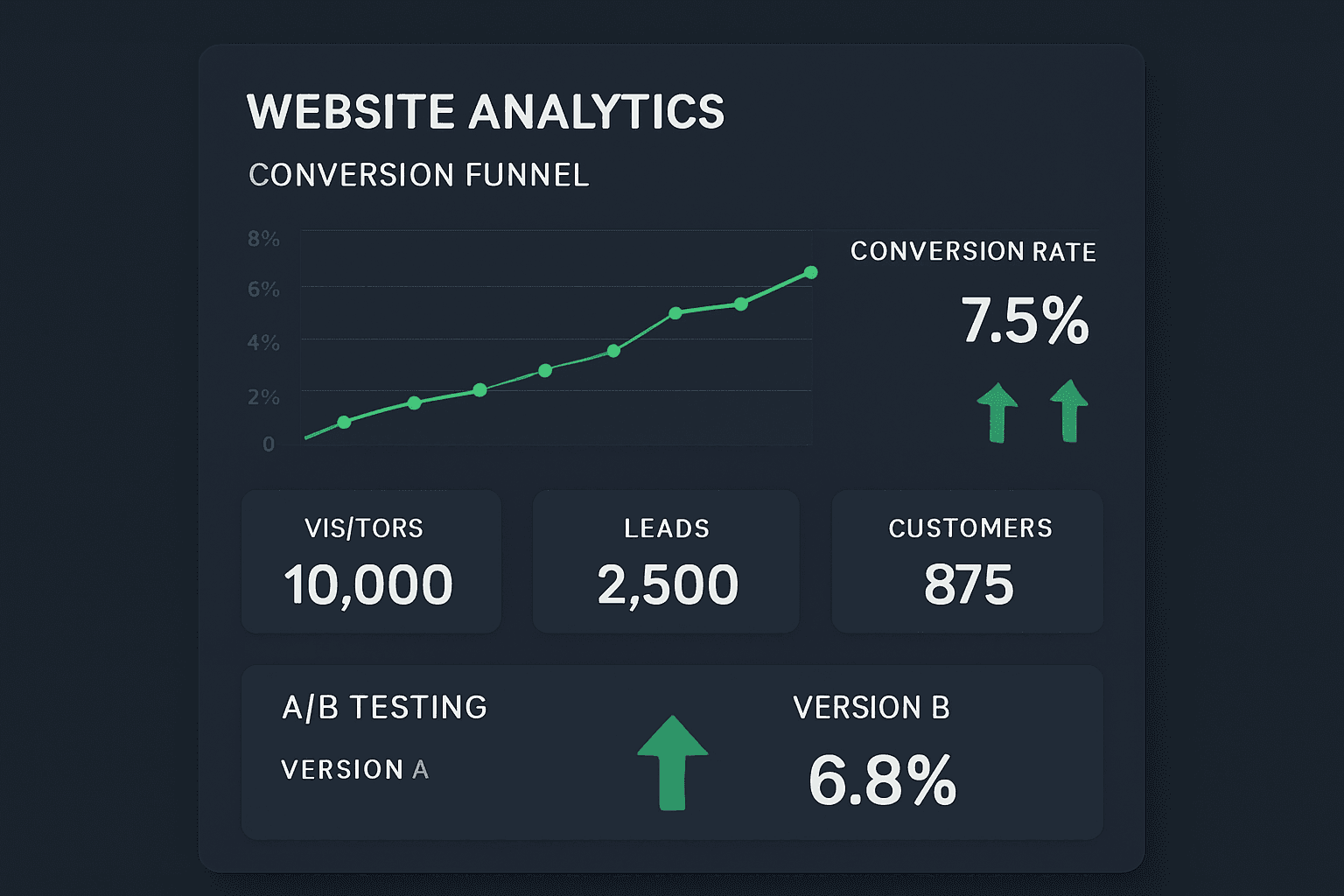
The Problem Is Not Your Traffic Volume
Most businesses respond to poor online performance by buying more traffic. More ad spend, more SEO investment, more social posts. The logic seems sound: more visitors should mean more enquiries.
But if your website is converting at 1%, doubling your traffic doubles your cost while keeping your conversion rate exactly the same. The leak is still there. You have just poured more water in.
Conversion rate optimisation is the discipline of fixing that leak. Instead of asking how to get more visitors, CRO asks how to get more value from the visitors already arriving. For most UK businesses, this is where the real growth is hiding.
What Conversion Rate Optimisation Actually Means
CRO is the structured process of increasing the percentage of website visitors who take a desired action. That action might be submitting an enquiry form, booking a discovery call, making a purchase, or signing up for a trial.
Your conversion rate is calculated simply: divide the number of conversions by total visits and multiply by 100. A site receiving 1,000 visitors per month and generating 10 enquiries has a 1% conversion rate. Lift that to 3% through CRO and you have tripled your leads without spending an extra penny on traffic.
What CRO is not: it is not guesswork, cosmetic redesign, or adding more features to a page. It is a process of identifying friction, forming hypotheses, testing changes, and measuring outcomes. Done properly, it is one of the highest-return activities a UK business can invest in.
The Four Biggest CRO Levers on a Business Website
Page speed and technical performance
Every second of load time above one second reduces your conversion rate. This is not a theory. It is a documented pattern across hundreds of studies and billions of data points. Visitors who wait are visitors who leave.
For UK businesses running on page-builder WordPress themes or hosting plans with poor server response times, this is often the single largest conversion drag on the site. A site loading in under a second converts at a materially higher rate than one loading in three seconds, with identical copy and design.
Speed is not just a user experience improvement. It is a conversion lever with a direct, measurable impact on revenue.
Above-the-fold clarity
The first thing a visitor sees determines whether they stay long enough to convert. If the hero section of your homepage or landing page does not immediately communicate what you do, who it is for, and why you are the right choice, most visitors will leave before reaching any call to action.
Clarity beats creativity here. A specific, plainly-worded headline that confirms the visitor is in the right place outperforms clever copy that requires interpretation. The goal is zero ambiguity in the first five seconds.
Trust signals and social proof
Conversion is a trust transaction. A visitor who does not trust your business will not hand over their contact details, their time, or their money. Trust signals are the elements of your site that close the gap between a stranger and a customer.
For UK service businesses, effective trust signals include: specific client testimonials with real names and measurable outcomes, recognisable brand logos from past clients, industry credentials and memberships, and transparent pricing or process information. Generic five-star ratings without context add almost nothing. Specific, named outcomes add a great deal.
CTA placement and form optimisation
Many UK business websites bury their primary call to action below several sections of content, expecting visitors to scroll to find it. High-converting sites make the desired action available at every stage of the scroll journey, not just at the bottom.
Form length directly affects completion rates. A contact form with eight fields will convert at a fraction of the rate of one with three fields. Ask for only what is needed to open the conversation. Gather the rest during follow-up.
How to Diagnose Your Conversion Problem
Before testing solutions, you need to know where visitors are losing interest. The core diagnostic tools are:
Analytics funnels show where visitors drop out of a multi-step process, such as a checkout or multi-page enquiry form. A high drop-off at a specific step points directly to friction at that point.
Heatmaps and scroll maps reveal how far visitors scroll, where they click, and what they ignore. A call-to-action button that nobody clicks is either invisible, unconvincing, or poorly positioned.
Session recordings show actual visitor behaviour in real time. Watching visitors try to use your site often surfaces usability issues that no amount of data analysis would reveal.
Conversion funnel by traffic source separates performance by channel. Organic search visitors and paid ad visitors often behave very differently. A CRO change that helps one audience may not help the other.
CRO for UK Service Businesses vs E-Commerce
The mechanics of CRO differ between service businesses and online retailers, though the principles are the same.
For e-commerce, the highest-leverage interventions are typically around the product page and checkout: image quality, trust signals at the point of purchase, delivery and returns clarity, and streamlined checkout flow.
For UK service businesses, the critical conversion moment is usually the enquiry. The questions to answer are: does the visitor understand what you offer and who it suits? Can they see evidence that you have done this before and done it well? Is the next step obvious and low-commitment enough to take?
The answer to those three questions determines whether a service business website converts or merely attracts visitors.
What TsvWeb Does Differently
We build every TsvWeb site in Next.js from scratch. No page builders, no themes, no inherited technical debt. This means sites load fast, serve correctly on every device, and can be adjusted quickly when testing reveals an opportunity.
We treat CRO as part of the build process, not an afterthought. Every page we design is built around a specific conversion goal, with social proof positioned where decisions are made and calls to action that reflect the exact outcome the visitor is looking for.
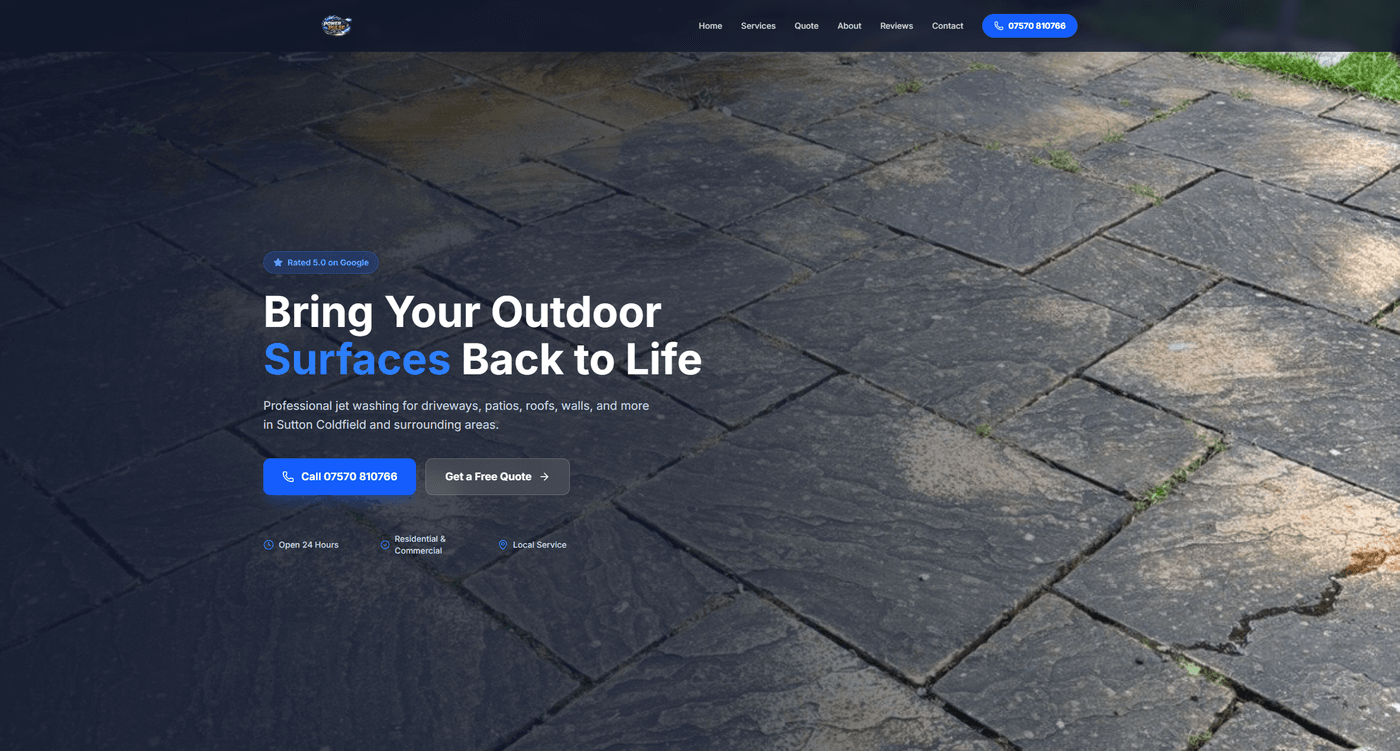
For Power Pulse Solutions, this approach produced a site that converts organic and paid traffic into qualified enquiries without a large ad budget. For MuscleMatrix, it created a product-focused experience that drove e-commerce revenue from day one.
If your current site is generating traffic but not enquiries, the page experience is almost certainly the cause. Talk to TsvWeb and we will walk you through exactly where your site is losing conversions and what it would take to fix it.