White Label Web Design UK: How Agencies Scale Projects Without Hiring Developers
Marketing agencies and brand studios win web projects they cannot build in-house. Here is how white label web design partnerships work, what to look for in a development partner, and how the right arrangement lets you take on more without staffing up.
The Agency Growth Problem Nobody Talks About
Creative agencies, PR firms, and brand studios grow by winning clients. The problem is that clients rarely stay neatly inside the scope of what your team can deliver. A branding engagement becomes a request for a new website. A content strategy wins you a client who then asks about a full digital presence. A social media retainer leads to a founder asking if you can rebuild their platform.
Turning those projects away is painful. Hiring developers to handle them is expensive, slow, and risky when project volume is unpredictable. This is the scaling problem most creative agencies hit around the three-to-five year mark, and it is the reason white label web design partnerships exist.
A white label arrangement lets you say yes to those projects, deliver under your own brand, and hand the technical build to a trusted partner who stays invisible to your client. Done correctly, it expands your revenue without expanding your headcount.
What White Label Web Design Actually Means
White label web design is a development partnership where an agency commissions a web build from a specialist development team, delivers it to their end client under their own brand, and takes the margin in between.
The development partner does not appear on any client-facing materials. The brief, client relationship, and project ownership all sit with the commissioning agency. The development partner handles the technical execution: writing the code, building the site, and handing it over ready to launch.
From the client's perspective, they are working with one agency. From the development partner's perspective, they are serving a B2B client rather than a consumer. The arrangement works because each party focuses on what they are best at.
What it is not: a hand-off of responsibility. The commissioning agency remains accountable to the end client for quality, timelines, and outcome. Choosing the right white label partner is therefore a commercial decision, not just a technical one.
Who Uses White Label Web Design Partnerships
The agencies that benefit most from white label arrangements share a common characteristic: they have strong client relationships and creative capability, but technical web development is not their core offering.
Marketing agencies frequently win integrated mandates that include web projects. Their clients trust them as strategic partners and expect them to handle the execution. Referring clients to a separate web agency breaks the relationship and introduces a competitor into the account.
Branding studios deliver identity systems that almost always need a digital home. Handing a client a new logo and brand guidelines with no website to implement them on leaves the project feeling incomplete. A white label partnership lets brand studios extend their scope of delivery without becoming web agencies.
PR and communications firms often work with clients who are relaunching, rebranding, or expanding into new markets. Those transitions typically require a new web presence. Owning that delivery strengthens the retainer relationship.
Freelance creative directors working on larger brand projects sometimes need a technical execution team to realise the work without hiring contractors directly.
In all these cases, the value of the partnership is the same: extended capability without the overhead of building a technical team.
What to Look for in a White Label Web Design Partner
The quality of the partnership depends almost entirely on the quality of the partner. These are the factors that separate reliable white label development teams from ones that create more problems than they solve.
Technical consistency. A partner who builds in one stack -- rather than switching between WordPress, Webflow, Squarespace, and custom code depending on the project -- produces sites that are predictable to maintain and update. TsvWeb builds exclusively in Next.js. Every site we deliver has the same architecture, the same performance characteristics, and the same handover documentation.
Clear communication protocol. The commissioning agency is the single point of contact for the end client. The development partner needs to communicate clearly and promptly with the agency, without requiring direct client access. Ambiguous or slow communication from the development side creates problems that the agency then has to manage upward.
Non-disclosure and brand neutrality. A white label partner should have no interest in approaching your client directly and no incentive to do so. The partnership works because both sides benefit from the arrangement staying in place. Any development partner who routinely works with agencies should be able to provide a standard NDA and operate entirely behind the scenes.
Realistic timelines. One of the most common white label failures is a development partner who overpromises on delivery speed and leaves the commissioning agency managing a difficult client conversation. Partners who quote honestly and deliver on schedule are worth paying a premium for.
Subscription or retainer capability. The most valuable white label partnerships are ongoing, not transactional. A development partner who can support clients on a retainer basis after launch gives the commissioning agency a recurring revenue stream and a reason to keep the client relationship active long after the initial project closes.
How the Workflow Actually Works
A typical white label web design engagement follows a straightforward sequence.
The commissioning agency wins the project and takes the brief from the end client. They scope the work, set the timeline, and agree the price with the client. The margin between what the client pays and what the development partner charges belongs to the agency.
The brief is passed to the development partner with all relevant assets: brand guidelines, copy, photography, wireframes or references. The development partner builds to spec, sharing progress at agreed milestones. The agency reviews, consolidates feedback, and passes consolidated change requests back.
The site is delivered to the commissioning agency, who presents it to the client under their own brand. Launch support, handover training, and ongoing maintenance are agreed separately -- either staying with the development partner on a white label basis or transitioning to the agency's own support model.
The cleaner the brief coming in, the smoother the build. Agencies that invest in a proper discovery and scoping process before handing to the development partner consistently get better results.

The Subscription Advantage for Agency Partners
White label arrangements work best when they are ongoing rather than project-by-project. A development partner on a retainer basis gives the commissioning agency predictable capacity, consistent quality, and a clear channel for client requests that arrive outside the original project scope.
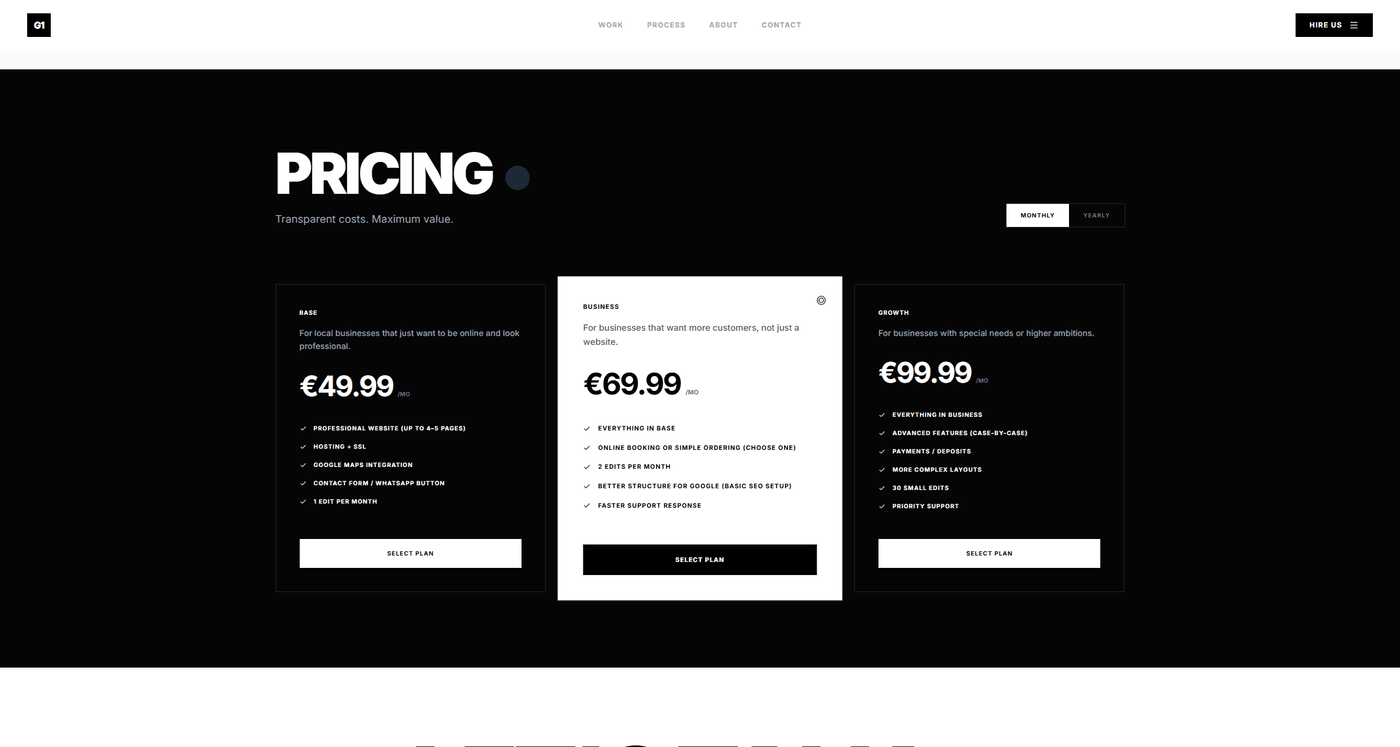
The subscription model also changes the economics. Rather than quoting separately for each update, change, or content addition, the agency can bundle those requests into a monthly retainer that covers both the development partner's fee and a margin for the agency. The client pays a predictable monthly figure. The agency earns recurring revenue. The development partner maintains the relationship with a stable workload.
This is the model TsvWeb operates on. Our subscriptions are designed to accommodate white label partnerships: a flat monthly fee, unlimited design and development requests within scope, and clear prioritisation so both the agency and their client always know what is in progress.
What TsvWeb Offers Agency Partners
TsvWeb works with marketing agencies, branding studios, and creative consultancies who need a reliable technical partner for web projects their team cannot deliver in-house.
We operate entirely white label. We build in Next.js, which means every site we deliver is fast, scalable, and built to a consistent standard. We communicate with the commissioning agency only, keep to agreed timelines, and provide clear documentation at handover.
Our subscription model is available to agency partners, either passed through directly to the end client or used as the foundation for the agency's own retainer offering. We can support ongoing client relationships for as long as the partnership makes sense.
If you are a creative agency, brand studio, or consultancy that routinely wins web projects you cannot execute in-house, the conversation is worth having.
Get in touch about a white label partnership and we will explain how the arrangement works in practice.