AI Website Builders vs Professional Web Design: What UK Businesses Need to Know in 2026
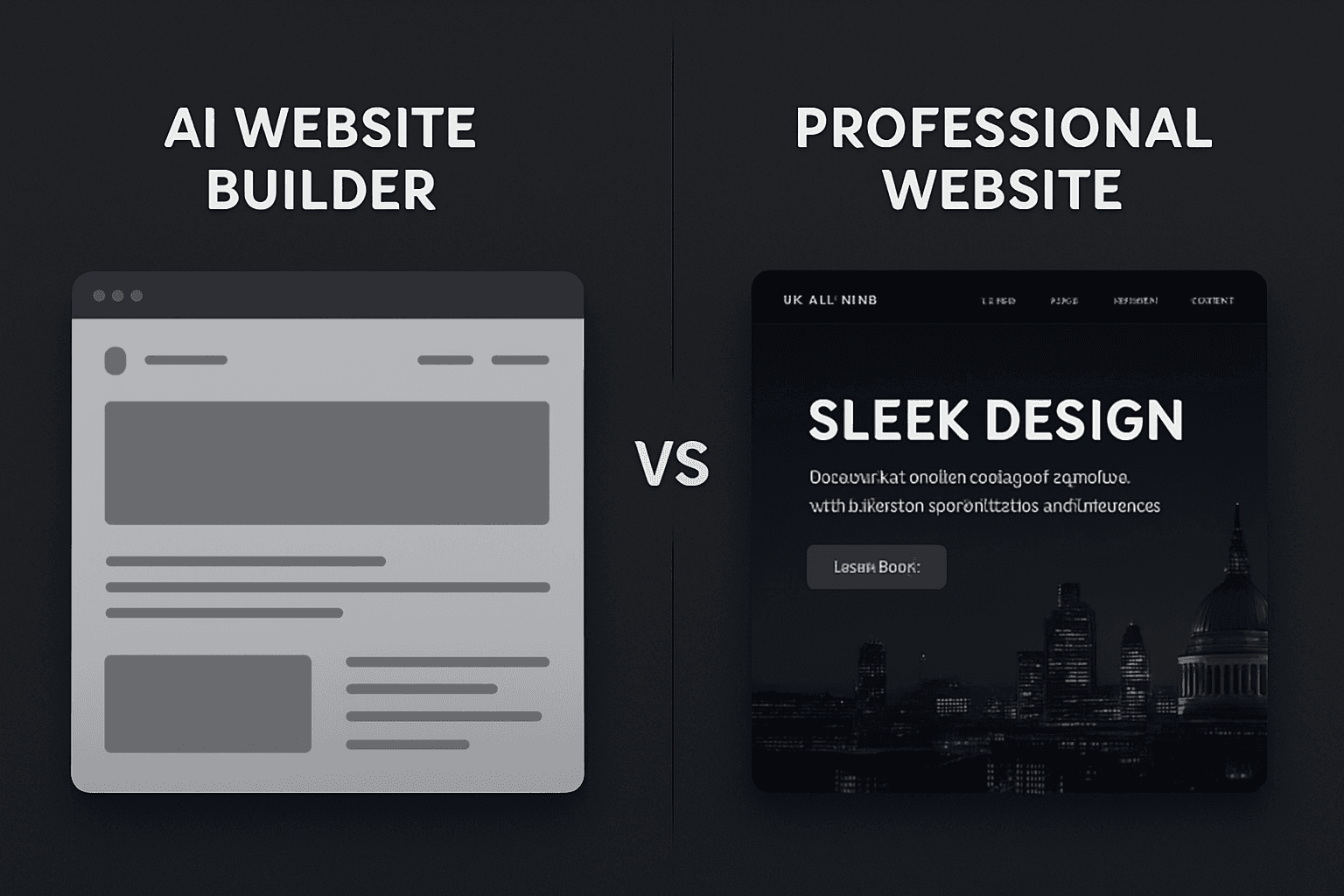
AI website builders promise a professional site in minutes. Some businesses get away with it. Most hit a ceiling faster than expected. Here is an honest breakdown of where AI tools end and where professional web design begins.
The Promise and the Reality
In 2026, you can generate a website from a text prompt. Type a description of your business, click a button, and receive something that looks, at first glance, like a professionally designed site. Wix AI, Framer AI, Squarespace Blueprint, and a growing list of similar tools have made this genuinely accessible in a way that was not true two years ago.
For some use cases, this is a real breakthrough. A side project, a personal portfolio for early-career work, a placeholder page for a new business not yet ready to invest properly — AI builders serve these situations reasonably well.
But for UK businesses where the website is a primary commercial channel, the picture changes. The gap between what an AI builder produces and what a conversion-focused professional build delivers is measurable in enquiry rates, organic search rankings, and long-term maintenance costs. That gap is worth understanding before you commit to either path.
Where AI Builders Perform Well
Honesty first: AI website builders have real strengths.
Speed of deployment is genuine. A basic site can go live in under an hour. For businesses that need any kind of web presence quickly while longer-term work is planned, this matters.
Visual templates have improved significantly. The designs generated by modern AI tools are not embarrassing. They are clean, mobile-responsive at a basic level, and use contemporary typography conventions. The gap between a template-generated site and a poorly executed custom site is narrower than it used to be.
Low barrier to iteration is underrated. Because the tools are so accessible, non-technical founders can update copy, swap images, and add basic pages without involving a developer. For businesses with constantly changing offers or messaging, this control is valuable.
If you are a sole trader testing a business idea, a creative professional who needs a portfolio before pitching for work, or a non-profit with minimal budget and no conversion goal beyond contact details, an AI builder is a reasonable starting point.
Where AI Builders Hit a Ceiling
The ceiling appears quickly for businesses where the website is expected to generate leads, rank in organic search, or reflect a positioned brand rather than a generic presence.
Performance is the first constraint. AI-generated sites are built on shared infrastructure with standardised code that serves thousands of templates. Load times that are acceptable in isolation become liabilities when Google is deciding which results to show for a competitive local search term. A Next.js site built and deployed on edge infrastructure consistently loads two to three times faster than the equivalent AI-generated template. That gap shows up in bounce rates, session depth, and conversion rates before it shows up in rankings.
SEO capability has a hard ceiling. AI builders handle basic metadata: title tags, description fields, image alt text. They cannot build the technical architecture that drives sustained organic growth. Structured data, dynamic canonical management, programmatic location pages, internal linking strategy, server-side rendering for crawlability, Core Web Vitals optimisation at a code level — these are not features you configure in a tool. They are decisions made in how the site is built from the ground up.
Brand differentiation disappears. Every AI builder generates from the same pool of design conventions. Two businesses in adjacent markets using the same tool will produce sites that look related to each other. Brand is increasingly the thing that makes a buyer choose you over the next result. If your site looks like a template, that differentiation is gone before the visitor has read a word.
Integration depth is limited. Booking systems, CRM connections, custom checkout logic, dynamic content driven by a database, role-based client portals, webhook-triggered automations — these are the kinds of functionality that grow with a business. AI builders support a fixed set of standard integrations. Custom logic requires custom code, which requires a developer anyway. The "no-code" promise breaks at the exact point where it matters most.
The Specific Business Types That Outgrow AI Tools Fastest
Some business profiles exhaust the capability of AI builders in months rather than years.
Service businesses targeting local organic search. A plumber, solicitor, or accountancy practice competing for "near me" searches in a specific city needs technical SEO that builder platforms cannot execute. Programmatic location pages, schema markup for local businesses, Core Web Vitals scores that sit above competitors — these require a custom build.
E-commerce brands scaling beyond launch. Template checkout flows have fixed abandonment rates built in. Custom checkout logic, product discovery built around a specific catalogue, and performance tuning for high-image-density pages are all outside what AI tools deliver. The difference shows directly in revenue.
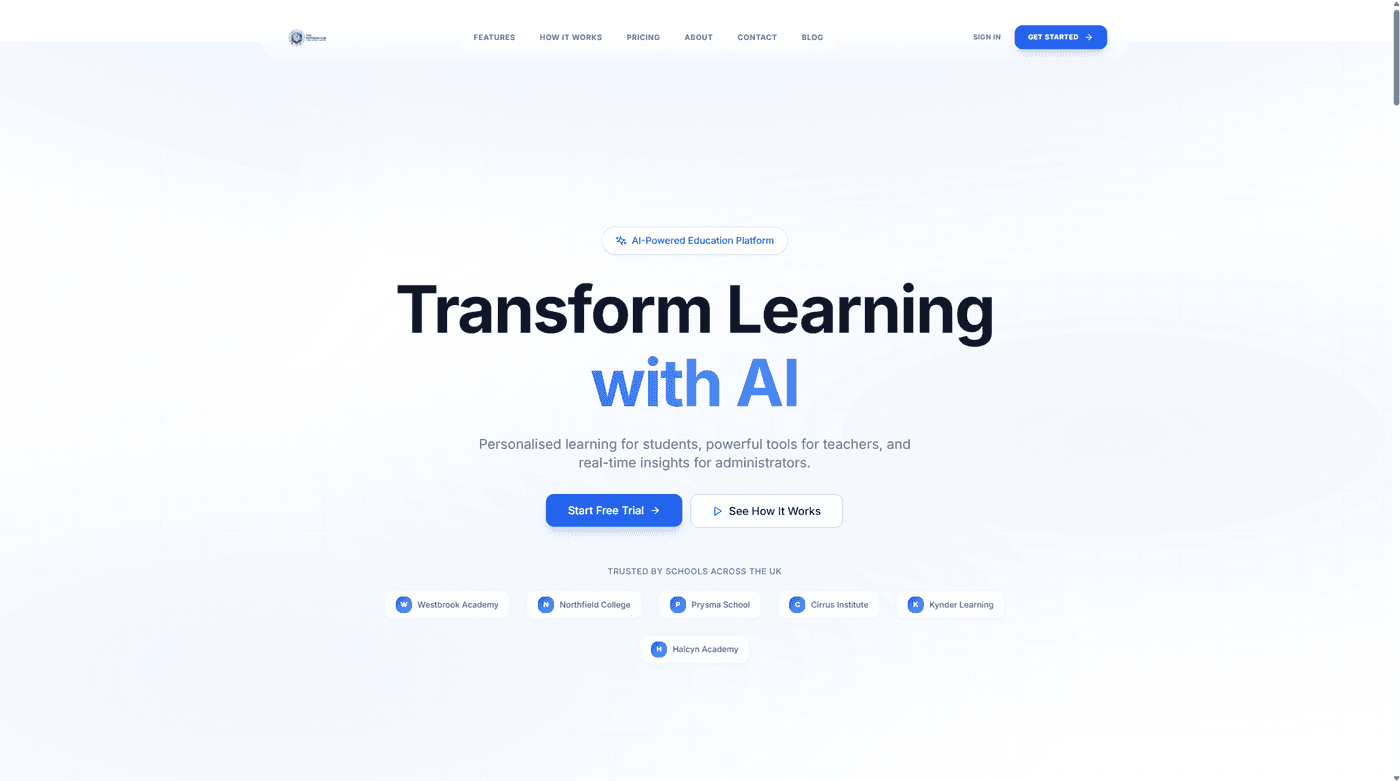
SaaS and platform businesses. A software product needs a landing page architecture that reflects its actual pricing structure, user journey, and conversion logic. It needs to integrate with product analytics, capture trial signups through bespoke flows, and communicate technical credibility through design that AI templates cannot approximate.
Personal brands and professionals. Racing drivers, founders, creatives, and independent consultants whose reputation is the product need design that signals taste and distinctiveness. A template signals the opposite.
What Professional Web Design Actually Provides
Professional web design done well is not about aesthetics over function. It is about building something that compounds.
A site built on Next.js with performance-first architecture continues to rank better as Google's algorithm weights Core Web Vitals more heavily. A site with custom brand design builds recognition in the market as it earns more links and traffic. A site built on a subscription model improves month-on-month as the relationship between client and agency deepens and content, pages, and functionality develop over time.
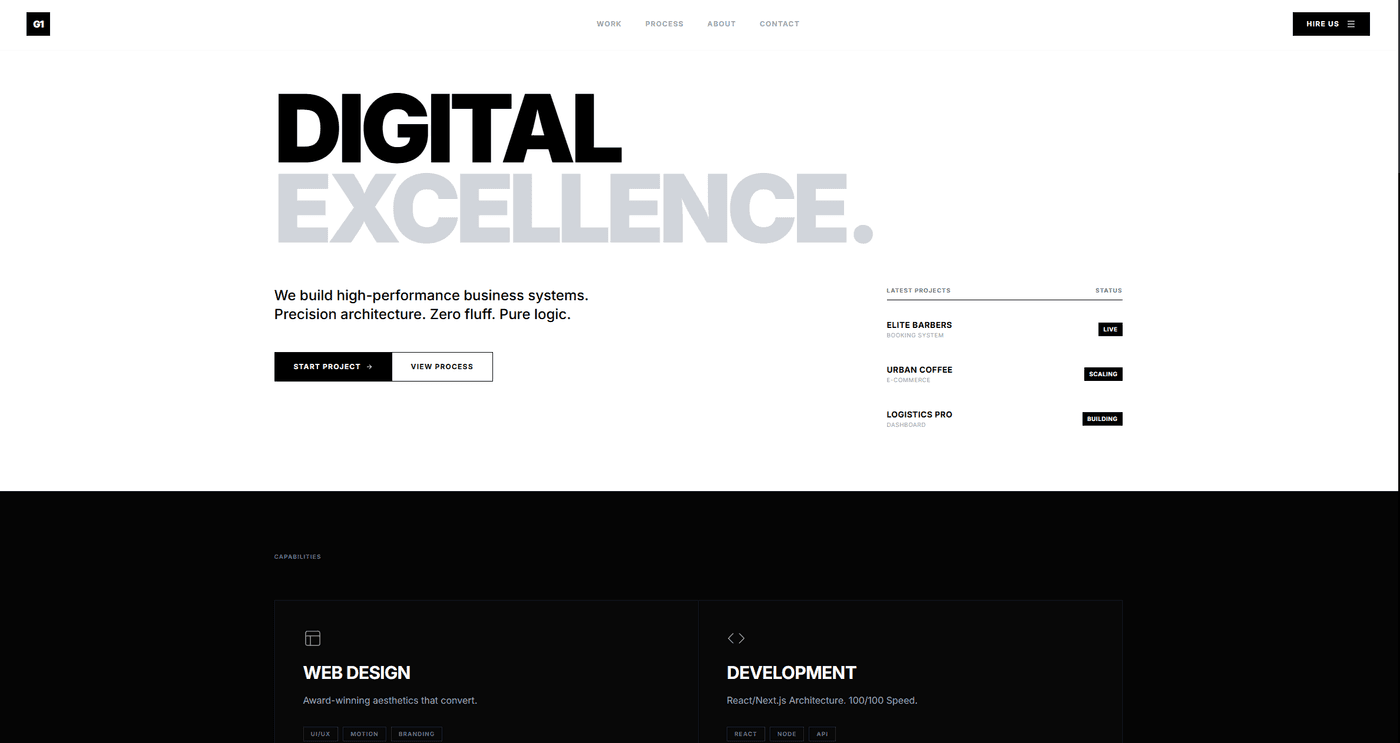
The sites we build at TsvWeb are not designed to be impressive at launch and then static. They are designed to get better. We work with clients on an ongoing subscription basis, which means the site is a living commercial asset rather than a one-time project that ages.
The Honest Comparison
| AI Website Builder | Professional Custom Build | |
|---|---|---|
| Launch speed | Hours | 2 to 4 weeks |
| Design differentiation | Low | High |
| Mobile performance | Moderate | Excellent |
| SEO ceiling | Limited | Uncapped |
| Custom integrations | Fixed set | Any |
| Ongoing improvement | Manual | Systematic |
| Monthly cost | £10 to £50 | £299+ subscription |
| Long-term commercial ROI | Low to moderate | High |
The cost comparison is where most businesses make the wrong decision. The AI builder looks cheaper because the monthly fee is lower. But the correct comparison is cost-per-converted-visitor, cost-per-enquiry, or revenue generated per pound spent. On those metrics, a high-performing professional site consistently outperforms a template, often dramatically.
The Right Question to Ask
The question is not "is an AI builder cheaper?" It is "what is my website expected to do, and what does it need to do that job?"
If the answer is "generate consistent inbound enquiries," "rank for local or industry search terms," or "reflect a brand that I am building a serious business around," then an AI builder is the wrong tool for the commercial objective, regardless of the upfront cost difference.
If you want to know whether your current website, AI-generated or otherwise, is doing the job it should be, we will give you a straight answer.
Book a free discovery call and let us look at what you have and what could be improved.