Framer vs Custom Web Design: What to Choose When You Have Outgrown DIY
Framer makes beautiful sites fast. Custom development makes sites that can do anything. Knowing when to switch is the decision most growing businesses face -- here is an honest breakdown of where Framer excels and exactly when it stops making sense.
Framer Has Genuinely Changed the Game
Let's be clear upfront: Framer is a genuinely good product. It has made it possible for design-savvy founders and solo creators to build visually impressive websites without a developer, in a fraction of the time a custom build takes.
If you have built or are considering building on Framer, that is not a bad decision. It is often the right one -- at a specific stage of your business.
The problem is not Framer. The problem is staying on Framer past the point where it is still the right tool for what your business needs.
What Framer Does Well
Framer's strengths are real and worth acknowledging:
Speed to launch: A competent Framer user can ship a polished-looking site in days. There is no developer dependency, no deployment pipeline to configure, and the visual editor is genuinely capable.
Design quality: Framer's animation system, component library, and responsive controls sit at the top of the no-code category. The output looks noticeably better than Squarespace or Webflow templates at equivalent build time.
Iteration speed: Want to change the hero section? Restructure the navigation? Experiment with a new layout? In Framer, these changes take minutes. You do not need to file a ticket or wait for a developer sprint.
Hosting and CMS: Framer bundles hosting and a basic CMS for blog content. For a simple content site, this removes an entire layer of infrastructure decisions.
These are genuine advantages. They explain why Framer has been adopted so widely by designer-founders, early-stage startups, and personal brands building their first professional presence online.
Where Framer Starts to Crack
The limitations of Framer do not show up on day one. They appear gradually, as your requirements grow beyond what a visual no-code tool can accommodate.
Custom backend logic: Framer cannot run server-side code. If you need a custom authentication flow, dynamic pricing calculations, real-time features, or a database-connected interface, you are wiring in third-party services -- each one adding cost, complexity, and a new failure point in your stack.
Complex data models: A basic blog or portfolio works well in Framer's CMS. The moment you need relational data -- products with variants, user-specific content, conditional rendering based on permissions or roles -- the CMS reaches its limit quickly.
Performance at scale: Framer sites perform well initially. But as you add interactions, third-party embeds, and CMS content, the performance overhead compounds. You do not control the underlying rendering pipeline, so your ability to optimise for Core Web Vitals is limited.
Vendor lock-in: Your Framer site is not portable. The code Framer generates is not designed to be maintained or extended outside the platform. If you decide to move, you are rebuilding from scratch rather than migrating an existing codebase.
Hosting costs at growth: Framer's pricing scales with traffic. At early stage this is negligible. At significant monthly visitor volumes, you are paying premium hosting rates for what amounts to a static site.
The Trigger Points for Moving to Custom
There are specific moments that reliably signal a Framer site has reached its ceiling:
You are integrating more third-party tools than you are designing. When Zapier automations, Memberstack, Outseta, and Make become load-bearing parts of your site's functionality, you are building a brittle stack. Custom development consolidates this cleanly into your own codebase.
You have hired a developer and they are frustrated. Developers handed a Framer site and asked to extend it have a consistent reaction: there is nothing to extend without rewriting. Framer's output is not designed to be a foundation for ongoing development.
Your brand has evolved past the site. Framer's component model makes it difficult to maintain true brand consistency across a large, complex site over time. Small design drift accumulates into incoherence.
You need ownership for commercial reasons. If investors, enterprise clients, or potential acquirers are reviewing your business, a website that runs on a third-party platform with no portable codebase is a liability. Owning your code signals maturity.
Your Framer hosting bill has become notable. At high traffic levels, you can self-host a Next.js site for a fraction of what Framer charges for equivalent traffic volumes.
What Custom Development Actually Means in 2026
Custom web development in 2026 does not mean slow, expensive, or developer-only. The tooling has improved significantly.
A Next.js codebase paired with a headless CMS gives you the editing experience of a no-code tool -- your team can update content visually -- with the performance, portability, and extensibility of a fully custom build. You get the content editing speed that Framer offers, with none of the backend constraints.
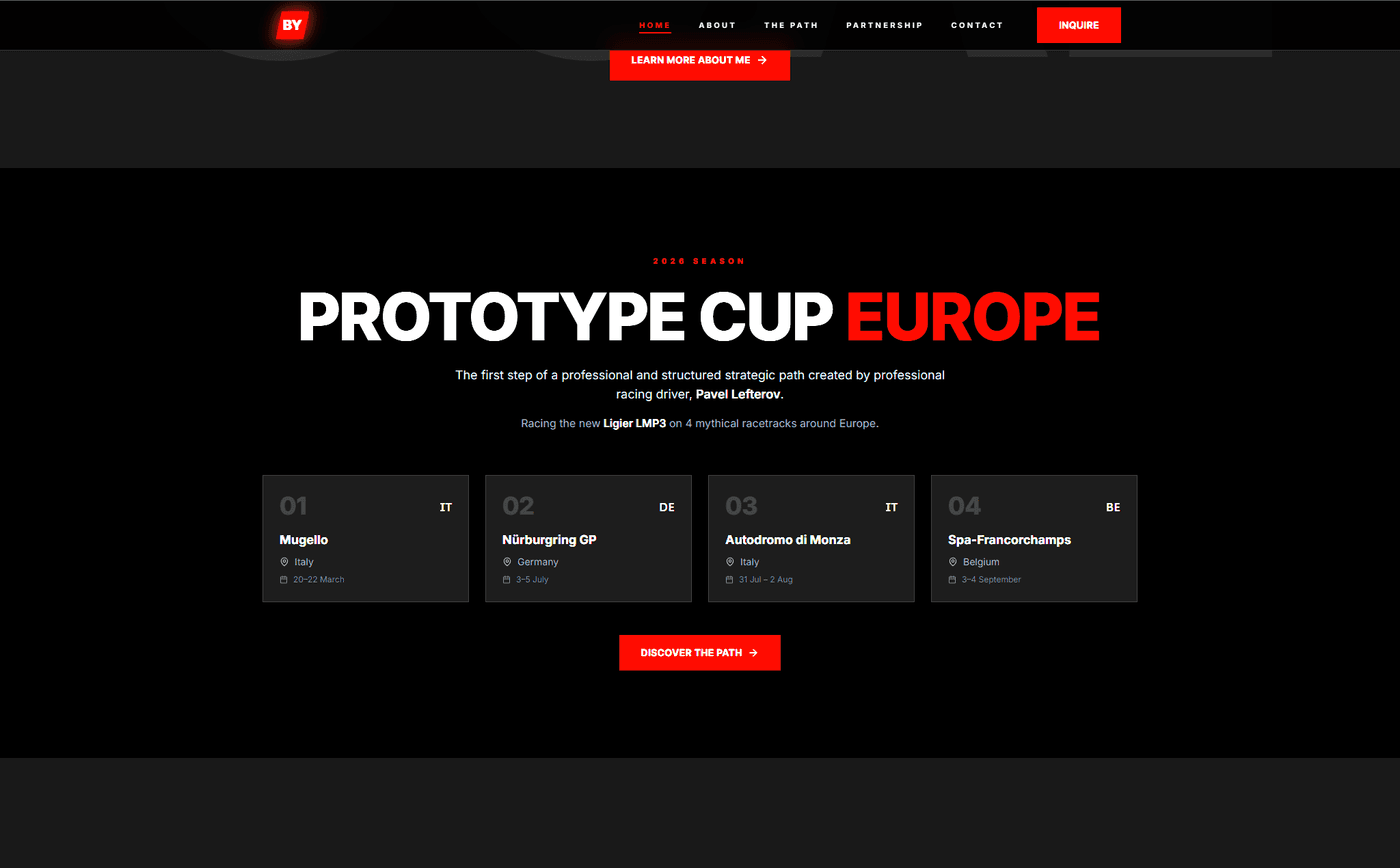
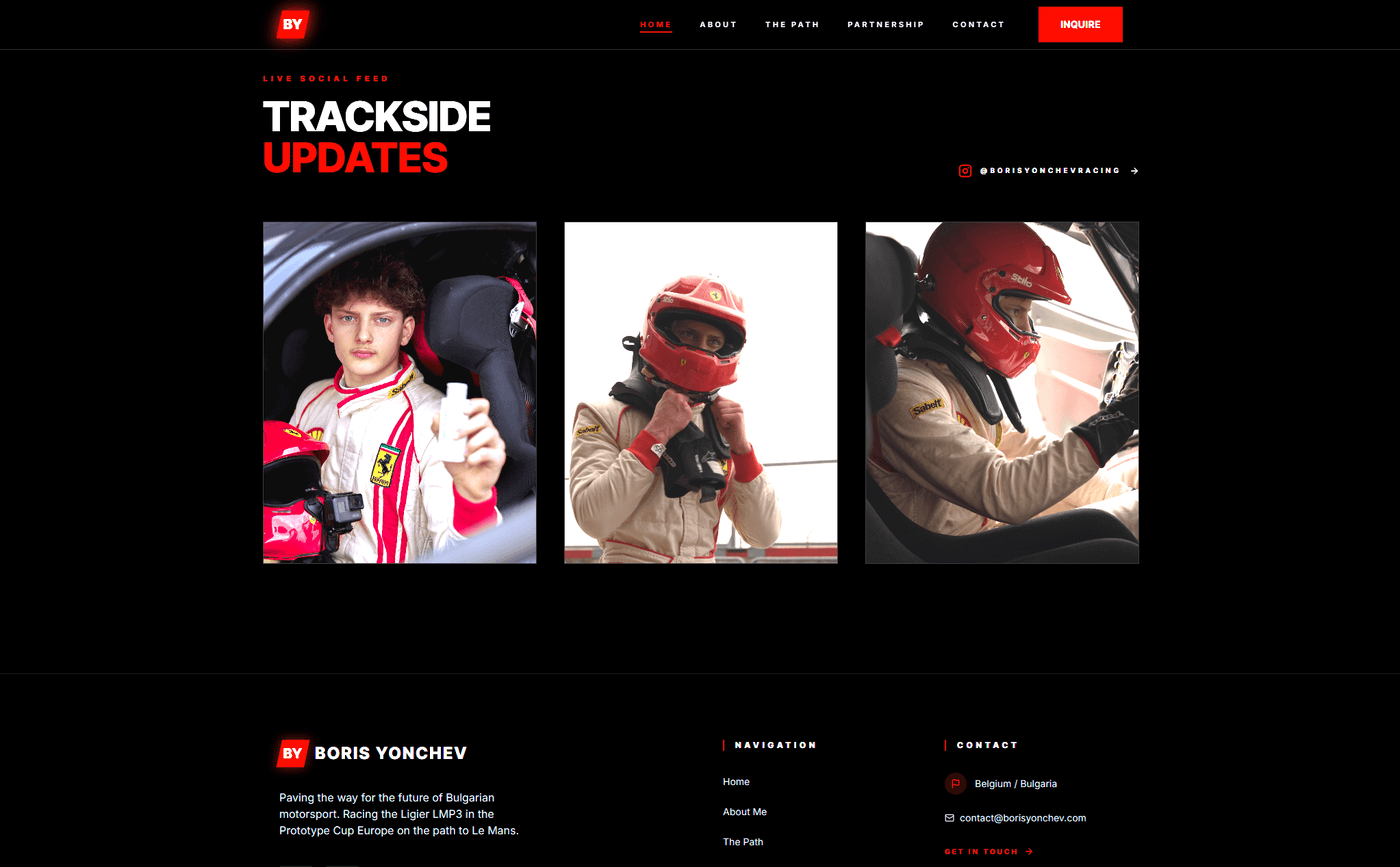
The site we built for Boris Yonchev includes custom 3D animations, dynamic content sections, and a performance profile that a Framer site at equivalent visual complexity could not match. The code belongs to him, can be deployed anywhere, and will be extended as his brand evolves into new markets and sponsorship relationships.
Framer or Custom: The Honest Decision Framework
This is not about which tool is technically superior. It is about which tool is right for where your business is right now.
Choose Framer if:
- You are pre-revenue or early-stage and need to move fast above all else
- Your site is primarily static content: portfolio, blog, simple landing page
- You have design skills but no developer access or budget
- You want to validate a concept before committing to infrastructure
Choose custom development if:
- Your site needs to do things (auth, data, integrations, real-time) not just look things
- You are growing and need the site to scale cleanly alongside your business
- You want full ownership and portability of your codebase
- You have passed the stage where raw iteration speed is more valuable than structural quality
- Your business genuinely depends on the site performing at a consistently high level
- You are raising investment or pursuing enterprise clients where technical credibility matters
The Transition Conversation
We have had this conversation many times: a founder comes to us with a Framer site that served them well for twelve or eighteen months and has now reached its limit. The rebuild discussion is never about Framer being bad. It is about the business having grown to a point where it needs more than Framer can offer.
We build the replacement in Next.js -- fast to load, clean to maintain, fully owned by the client, and designed to accommodate where the business is going, not just where it is today.
If you are at that inflection point -- Framer has taken you this far and you can feel the ceiling -- let's have an honest conversation about what the next version of your site needs to look like.