Local Business Website Design UK: Turn Your Site Into Your Best Sales Tool
Most local business websites exist to tick a box. Here is what a properly built local business website actually does, and why the gap between good and average costs real money every month.
Your Website Is Working Right Now, Whether You Want It To or Not
Every time a potential customer Googles your business, checks your name on their phone, or clicks a link from your social profile, your website is making an impression. That impression is either helping or hurting you. There is no neutral outcome.
For local businesses across the UK, this moment happens dozens or hundreds of times a day. A plumber in Sheffield. A beauty salon in Bristol. A solicitor in Manchester. Each one has customers searching for exactly what they offer, right now, and the website is either closing that gap or widening it.
The problem is that most local business websites were built to exist, not to perform. A template was picked, some text was added, a phone number went in the footer, and the site went live. The business owner moved on to running their business. The site sat there, silently underperforming.
What Local Customers Actually Do Before They Buy
Understanding how local customers behave before making contact changes how you think about your website.
The typical buying journey for a local service looks something like this: a need arises, the person searches on their phone, they scan 2-3 results on the first page, they click one or two websites, they spend between 5 and 30 seconds on each, and then they either call, enquire, or go back and try someone else.
That entire process, from search to decision, often takes less than three minutes.
What they are looking for in those seconds is simple: can I trust this business to do what I need, and can I contact them easily? If your website answers both questions confidently, quickly, and on a small screen, you get the enquiry. If it does not, your competitor does.
There is no second chance built into this process. The visitor who leaves without contacting you is almost certainly gone for good.
The Four Things a Local Business Website Must Get Right
1. It must load fast on mobile
Over 60% of local search traffic in the UK comes from mobile devices. Slow sites lose the majority of their potential customers before a single word is read. Google's research shows that a one-second delay in load time reduces conversions by 7%, and most mobile visitors abandon a site entirely if it takes more than three seconds.
Performance is not a technical nicety. It is a revenue variable.
2. It must be instantly clear about what you do and where you do it
A local business homepage needs to answer three questions before the visitor even scrolls: What do you do? Where do you do it? What should I do next?
"Welcome to our website" answers none of these. A clear headline like "Professional Jet Washing Services Across South Wales" answers all three in eight words. That clarity is the difference between a visitor who stays and one who bounces.
3. It must build trust fast
A stranger arriving at your website has no prior reason to trust you. They need signals that you are legitimate, experienced, and good at what you do. Those signals need to be visible without scrolling.
The most effective trust builders for local businesses are: real photos of your work or your team (not stock images), genuine testimonials with names and locations, years of operation or number of customers served, and any accreditations, certifications, or association memberships that are relevant to your trade.
A Google Business Profile link or visible star rating also carries significant weight. It shows that your reputation exists outside your own website.
4. It must make contacting you as easy as possible
The entire point of a local business website is to generate an enquiry. Yet most sites bury the phone number in the footer, have a contact form that looks broken, or require the visitor to navigate multiple pages before finding a way to get in touch.
A click-to-call button visible at the top of every page on mobile. A short, friction-free contact form. Clear opening hours. A map embed if you have a premises. These are not extras. They are the mechanism by which a visitor becomes a customer.
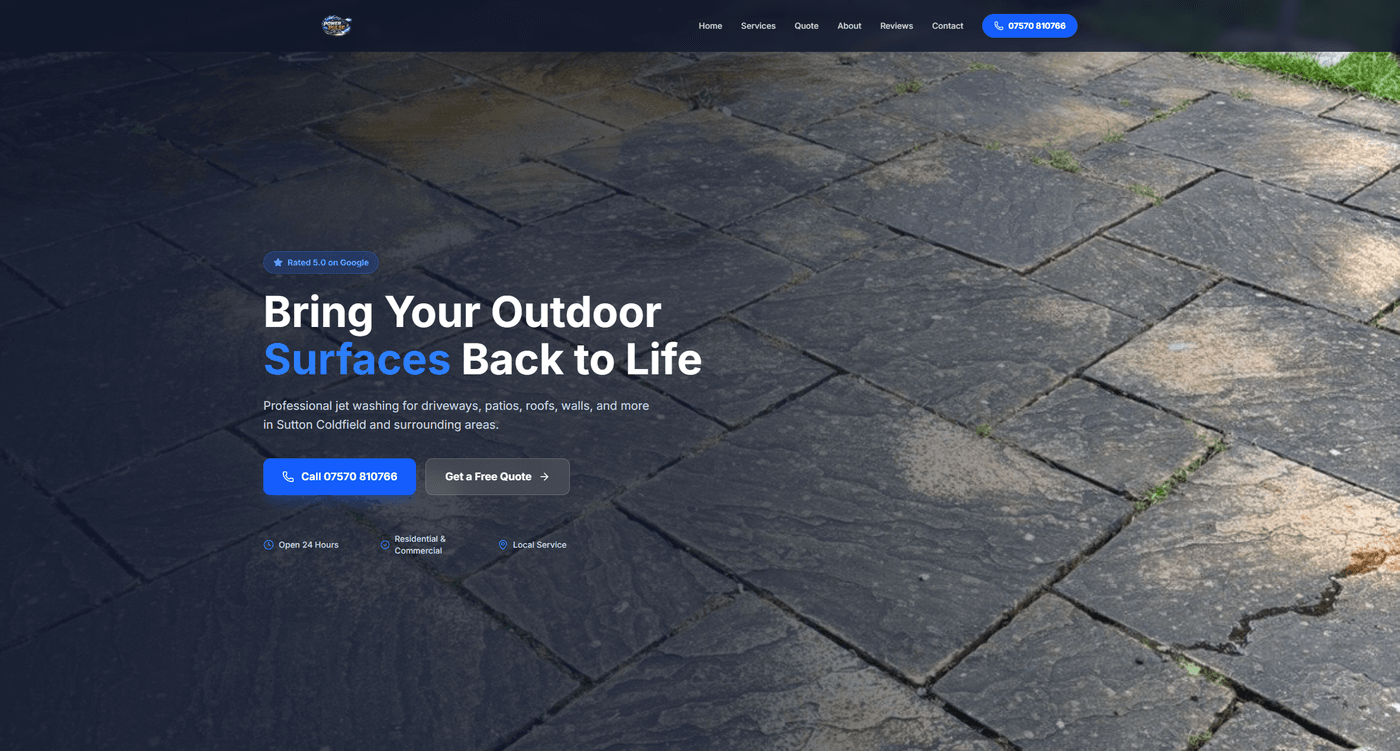
Why Template Sites Fail Local Businesses
Wix, Squarespace, and most page builder templates look acceptable at first glance. They are quick to set up and affordable upfront. But they carry structural problems that compound over time.
Template sites are slow by design. They load entire libraries of unused code on every page, drag on mobile connections, and routinely fail Core Web Vitals tests. For a local business competing in Google's local pack, that performance gap is a ranking penalty that does not go away.
Template sites are also generic by definition. The layout, the structure, the content hierarchy, they all follow a pattern built for nobody in particular. A jet washing business in Cardiff and a wedding photographer in Leeds end up with websites that follow the same logic, because the template does not know the difference.
Your local customers do not need a generic website. They need a site that speaks directly to their situation, answers their specific concerns, and reflects the real quality of your work.
What Local SEO Requires from Your Website
If you want your business to appear when someone searches "plumber near me" or "best hairdresser in [your town]", your website needs more than keywords in the text.
Google's local ranking algorithm weighs three things heavily: relevance, distance, and prominence. Your website contributes to relevance and prominence. Relevance comes from having clear, specific content about your services and service areas. Prominence comes from consistent citations (your business name, address, and phone number appearing the same way across directories), reviews, and a well-maintained Google Business Profile.
A site built with Next.js and proper server-side rendering loads fast, is fully indexable, and scores well on Core Web Vitals. These technical factors are part of how Google assesses quality. A slow, mobile-unfriendly site on a shared-host template is fighting those rankings from day one.
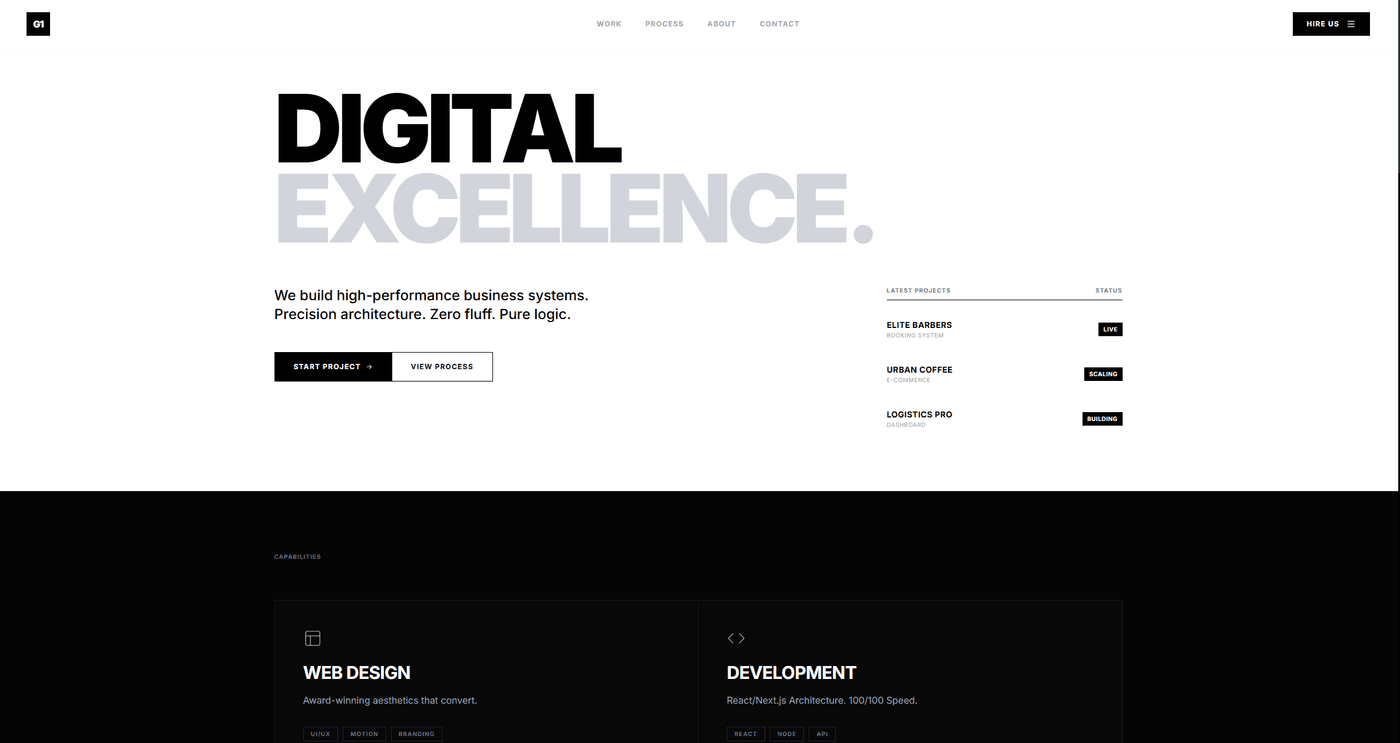
The Maths of Getting This Right
The economics of a better local business website are straightforward.
Say your site currently gets 200 visitors a month from local search and social. At a 1% conversion rate, that is 2 enquiries a month. A properly built site, with fast load times, clear messaging, and frictionless contact options, might convert at 3 to 4%. That is 6 to 8 enquiries from the same traffic.
For a trade business closing 50% of enquiries at an average job value of 300 pounds, doubling conversions is worth thousands of pounds a month. Not from more marketing spend. From the same visitors making a different decision when they land on your site.
This is why "just get something online" is expensive advice, even when it feels like the cheaper option.
How TsvWeb Builds for Local Businesses
Every local business site we build starts from the same foundation: a clear brief, a mobile-first design process, and Next.js as the base technology. No templates, no page builders, no inherited performance debt.
We build for the journey your customer is actually on: searching on a phone, in a moment of need, with 30 seconds of patience. That means fast pages, clear hierarchy, visible contact options, and content that answers their question before they have to scroll.
We have built sites for service businesses, professional practices, and specialist retailers across the UK. The pattern that emerges is consistent: a properly built site outperforms a DIY template in both rankings and conversions, usually within the first three months.
If your current site is not generating the enquiries your business deserves, get in touch with TsvWeb. We will take an honest look at what is holding it back and what a better site would actually cost you to build.