Vibe Coding vs Professional Web Design: When AI-Generated Websites Work (And When They Fall Apart)
Vibe coding tools like Cursor, Bolt, and Lovable have made building a website faster than ever. But fast is not the same as good. Here is where AI-generated websites shine, where they break down, and how to know which approach your business actually needs.
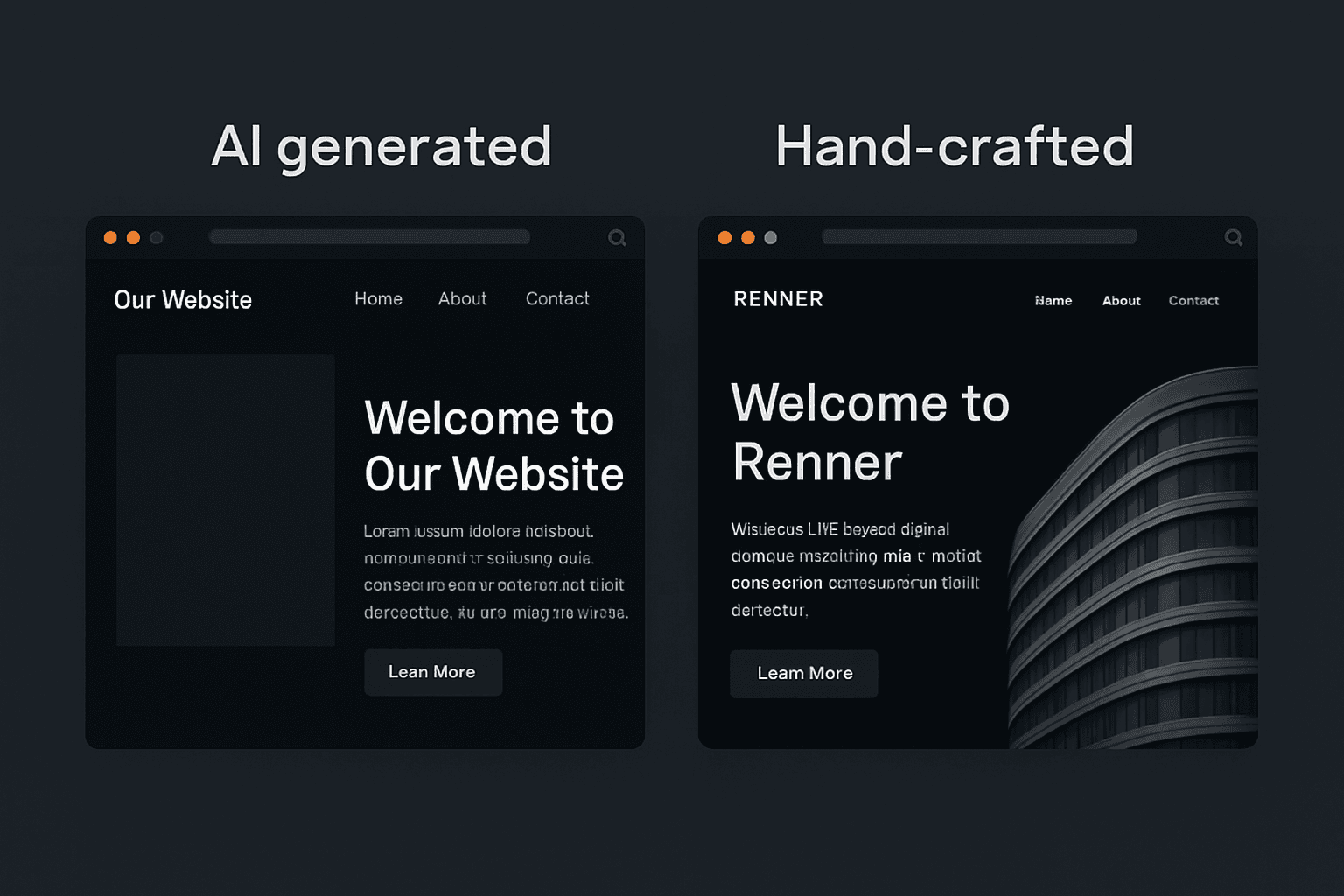
The Vibe Coding Wave Is Real
In 2026, it is genuinely possible to describe a website in plain English and have an AI generate a working codebase in minutes. Tools like Cursor, Bolt, Lovable, and v0 have collapsed the barrier to entry for building web products. Founders are shipping MVPs in a weekend. Solo operators are standing up marketing sites without writing a line of code themselves.
This is not hype. It is a real shift in how software gets built, and it has changed the expectations around speed and cost for web projects.
But there is a gap between what vibe coding tools can produce and what a business actually needs from its website. That gap matters -- and ignoring it is expensive.
What Vibe Coding Does Well
To be honest about this, AI-assisted coding tools have genuine strengths:
Speed of prototyping. For founders who need to test an idea, validate a concept, or put something in front of investors quickly, vibe coding is genuinely excellent. A functional prototype in hours rather than weeks is a real competitive advantage at the idea stage.
Low initial cost. If you have a clear brief, the right tools, and some technical intuition, you can produce a site that works without paying a developer. For very early-stage projects where budget is the binding constraint, this is a legitimate path.
Simple, well-defined builds. A single-page landing page with a waitlist form, a basic portfolio with static content, a personal blog with standard functionality -- for these specific use cases, the quality ceiling of AI-generated code is often high enough.
The tools have improved remarkably. Year-over-year, the gap between AI-generated and hand-built code has narrowed for straightforward use cases.
Where AI-Generated Websites Break Down
The problems start when the brief gets more specific, the design needs to be distinctive, or the site needs to scale.
Brand identity does not survive the prompt. A website is one of the most important brand assets a business owns. It communicates personality, trust, and positioning before a single word is read. AI tools generate visually competent layouts, but they produce the same design vocabulary -- clean, geometric, generic. The result is indistinguishable from dozens of competitor sites. Your brand's specific visual identity, its tone, its way of drawing hierarchy and emphasis -- these require human judgment that no prompt can fully encode.
Performance degrades quickly. AI-generated codebases tend to accumulate inefficiencies. Redundant dependencies, unoptimised images, missing caching headers, slow database queries -- these problems are not visible to a non-technical founder reviewing a prototype, but they compound into meaningful performance penalties at scale. A site that scores 60 on PageSpeed Insights loses rankings and converts fewer visitors, regardless of how well the copy reads.
Custom logic requires human architecture. As soon as a project involves multi-step user flows, conditional logic, third-party API integrations, or non-standard backend requirements, AI-generated code starts to struggle. It can produce individual components, but it lacks the architectural judgment to connect them cleanly. The result is brittle code that works until a requirement changes and then breaks in unexpected ways.
SEO requires more than structure. A technically sound site is necessary but not sufficient for organic search performance. Schema markup, canonical URLs, dynamic metadata per page, structured internal linking, performance targets for Core Web Vitals -- this is not a list of boxes to tick once. It is an ongoing design discipline. AI tools produce the scaffolding; someone needs to build the system on top of it.
Scalability is not a free property. A site that works for 100 visitors per month has different requirements to one handling 10,000. Design systems, component libraries, consistent design language across dozens of pages, content workflows -- these do not emerge automatically from a vibe-coded codebase. They need to be designed in.
The Specific Ways This Goes Wrong in Practice
The pattern we see most often: a founder builds their site with Bolt or Lovable, gets something functional, and launches. It looks fine at first glance. Then the problems surface:
- The site loads in 4.2 seconds on mobile, which is destroying their Google Ads conversion rate
- The design is clean but it could belong to any competitor in the category -- there is nothing distinctive about it
- The blog section they added later does not have proper metadata, so posts are not being indexed correctly
- They need to add a client portal and the existing codebase is too messy to extend cleanly
- Their developers, when they eventually hire them, need to rewrite large sections because the architecture does not support the requirements
At this point, the "fast and cheap" prototype has cost more in opportunity and rebuild time than a properly scoped build would have from the start.
How to Decide Which Approach You Need
The honest answer is that context determines this. Vibe coding is the right tool for some situations. Professional design and development is the right tool for others.
Use AI tools if:
- You are at the idea validation stage and need something functional in days
- Your site is static, simple, and the goal is just online presence rather than conversion
- You have technical ability to review and maintain what is generated
- Speed to market genuinely matters more than quality at this exact moment
Invest in professional design and development if:
- Your website is a primary channel for customer acquisition or revenue
- Your brand needs to communicate authority, trust, or premium positioning
- You need complex functionality: bookings, user accounts, custom APIs, e-commerce
- You want a site that performs for search, not just a site that exists
- You are building for growth and need a codebase that scales with you
The line is not drawn by company size or funding. We have worked with early-stage founders who needed a site that converts from day one, and the investment paid back in the first month. We have also seen funded businesses use vibe coding tools to move fast during product discovery -- sensibly.
What Professional Web Design Actually Delivers
Working with TsvWeb means you get a site built in Next.js on a performant, scalable architecture. Page speed is a first principle, not a final check. Design is custom to your brand -- not a modified template or a prompted layout. Every page is built with conversion as the goal, not just visual coherence.
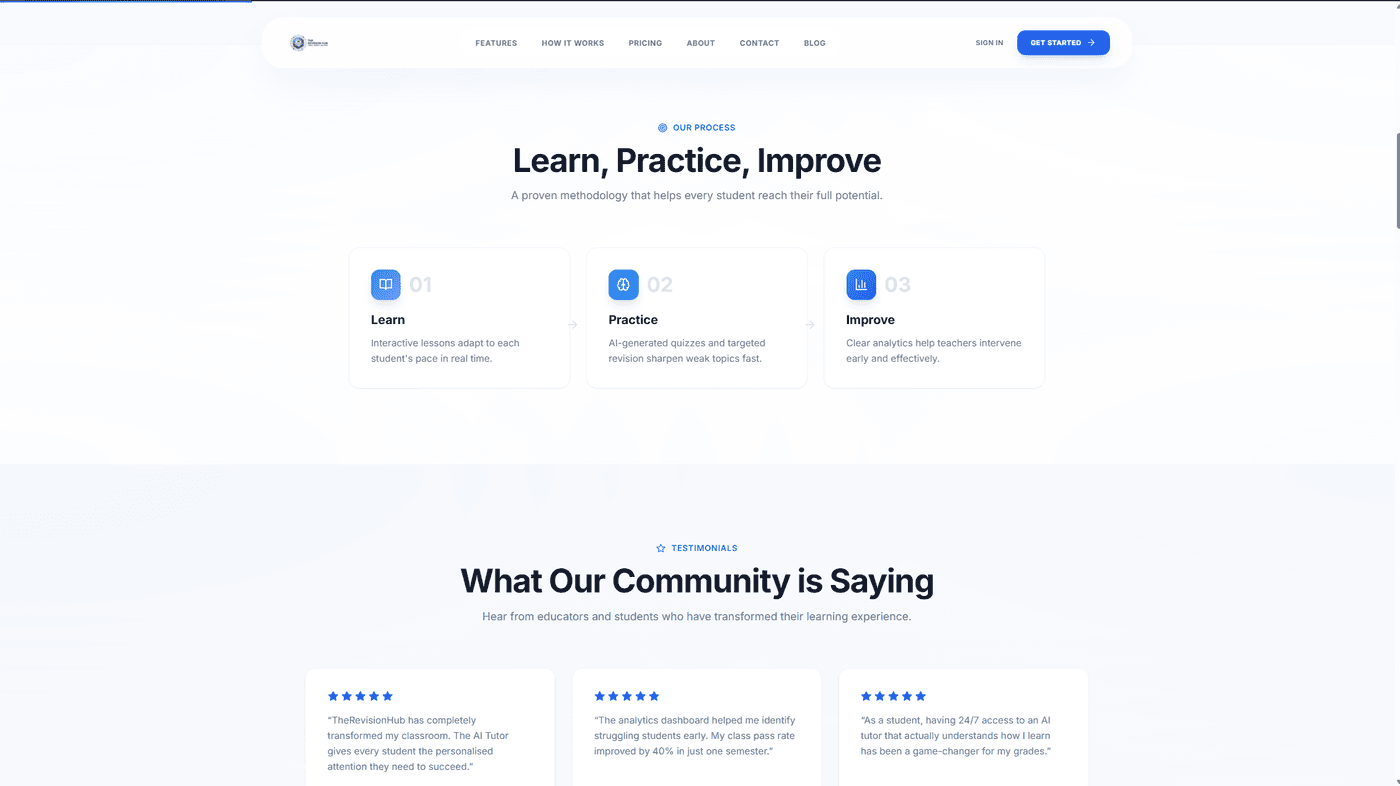
We have built platforms with the complexity of TheRevisionHub -- a full SaaS product with user authentication, subscription tiers, and custom onboarding flows. We have built booking systems like Vonlix, where performance and reliability are directly tied to revenue. These are not AI-generatable in any meaningful sense.
That does not mean every project needs the same scope. We also work with service businesses who need a clean, fast, well-converting site that represents their brand properly. The common thread is intentionality: design decisions made for a reason, by people who understand what the site needs to do.
The Question to Ask Yourself
Not "can AI build my site?" -- it can, at least in part, for at least some sites.
The better question is: "What does my website need to achieve, and what is the cost of it not achieving that?"
If the answer involves revenue, reputation, or competitive advantage, that is not a question to answer with a prompt.
Talk to us about your project and let's work out what approach actually makes sense for where you are.