Web Design for Law Firms UK: Win More Instructions Before the First Meeting
Most law firm websites look credible but generate almost no new business. Prospective clients are making decisions based on your digital presence before they ever call. Here is what needs to change.
The Law Firm Website Problem
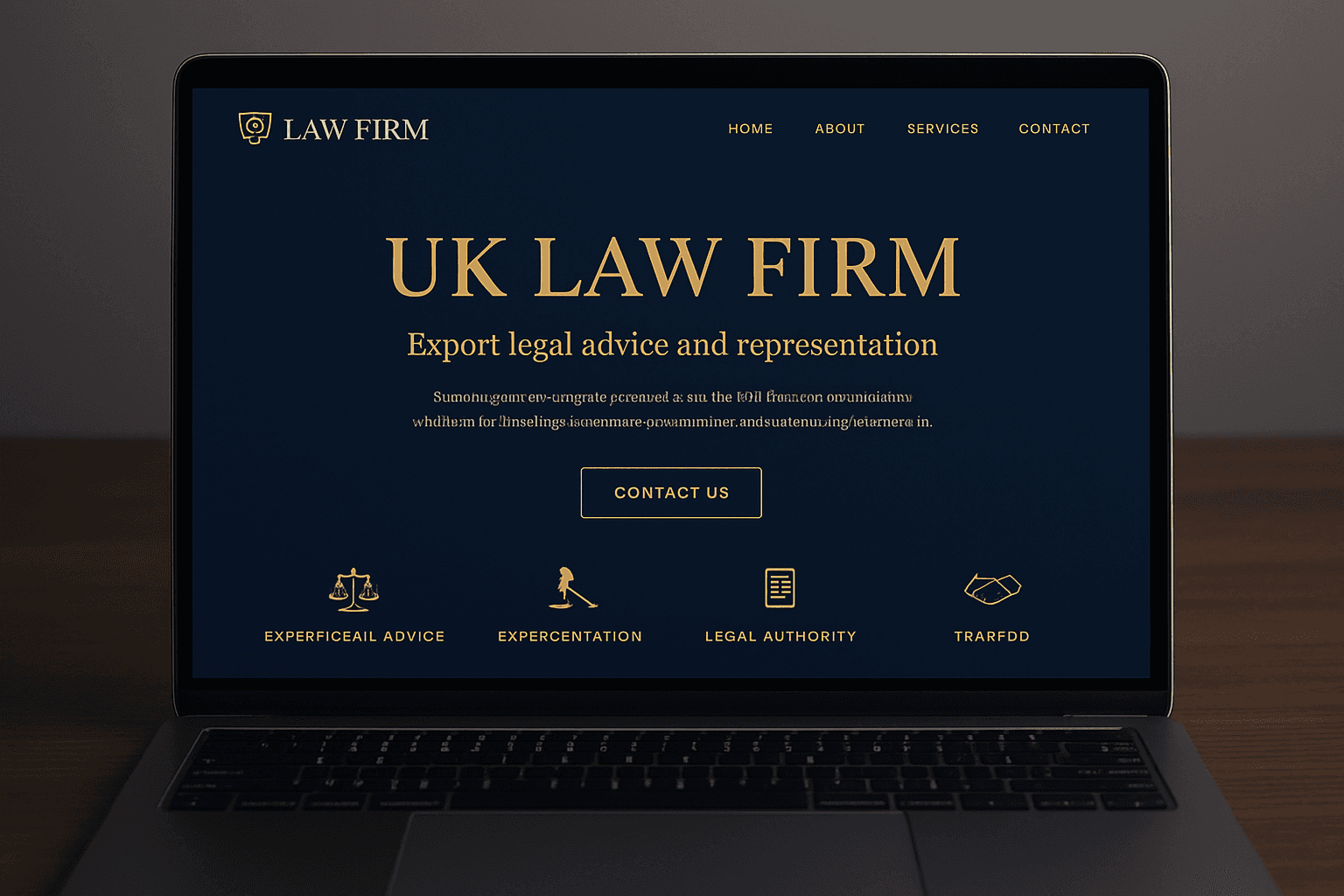
Search for any law firm in the UK and the pattern becomes predictable quickly. Conservative navy branding, a stock photograph of a gavel or someone in a suit, a list of practice areas with no useful detail, and a contact page with a phone number that goes to a switchboard.
These sites pass a basic credibility check. If a referral recipient types a firm name into Google and something professional appears, the box is ticked. But they are not built to generate new instructions. They are built to avoid embarrassment.
In a sector where client acquisition has relied heavily on word-of-mouth for decades, that trade-off has felt acceptable. The problem is that referral networks are narrowing, younger decision-makers default to search rather than asking a colleague for a recommendation, and the firms investing in a properly designed digital presence are winning the instructions that used to flow automatically.
What Prospective Clients Are Doing Before They Call
Before a prospective client picks up the phone or sends an email, they will spend time on your website. They are not passively browsing. They are evaluating.
They want to know whether you handle situations like theirs. They want to understand who specifically they would be working with. They are reading between the lines of every page, assessing whether this firm is sharp, credible, and worth the trust that hiring a solicitor requires.
A generic law firm website does not answer those questions. It describes the firm in abstract terms, lists service areas without context, and leaves the prospective client no more certain than before they arrived. That uncertainty converts into a phone call to a competitor who answered the questions more clearly.
Five Things Legal Websites Must Get Right
Specialisation over breadth
Law firms often want to signal that they can handle anything. The effect on prospective clients is the opposite of reassuring. A firm that says "we specialise in commercial property disputes for growing SMEs" is more compelling than one that says "we offer a full range of legal services."
Specificity signals expertise. It also pre-qualifies visitors, which means the enquiries that arrive are better matched to what the firm actually does well.
Practice area pages built for search
Most law firm service pages are written for the approval committee, not for Google or for clients. They use formal legal language, describe services abstractly, and are optimised for nobody.
Practice area pages that rank and convert are structured differently. They lead with the client problem, use the language a client would actually search for, and answer the questions a prospective client brings to the first consultation. This approach serves both the visitor and search engines simultaneously.
Named solicitors with genuine bios
Clients hire people, not firms. The partners page is often the most visited section of a law firm website, yet most firms populate it with a job title, a headshot, and a list of qualifications.
A genuine biography that explains the type of client a solicitor works with best, the kinds of outcomes they have achieved, and something of their approach to client relationships builds the kind of connection that accelerates the decision to reach out.
Social proof that is specific to outcomes
A generic testimonial reading "excellent service, very professional" could apply to any firm in any sector. The testimonials that actually influence decisions are specific: a named client, a defined situation, a measurable result. "Helped us complete a complex commercial lease negotiation in four weeks when our previous firm had stalled for months" is the kind of proof that converts hesitation into an enquiry.
Mobile performance designed for busy decision-makers
The majority of legal service searches in the UK happen on mobile. Partners, directors, and business owners are browsing during commutes, between meetings, and in the evenings when the situation they are dealing with has reached a point where they need help. A site that is slow to load or difficult to read on a phone loses that moment entirely.
The Local SEO Gap Most Firms Miss
Here is the compounding issue with the standard law firm website: it ranks for nothing.
No blog content. No locally optimised service pages. No geographic targeting beyond an address in the footer. The firm exists on the web but is invisible to the prospective clients who are actively searching for exactly what it offers.
Organic search in legal services is exceptionally valuable because the intent is so high. Someone searching "employment solicitor Leeds" or "commercial property lawyer Manchester" is ready to hire. A firm that appears at the top of those results, with a website that clearly speaks to that specific need, will consistently win instructions over firms that do not invest in this.
A local SEO strategy for a law firm does not require a content team. It requires well-structured service pages with geographic targeting, a maintained Google Business Profile, and a small number of genuinely useful articles that answer the questions prospects are already asking online.
What the Best Legal Websites Do Differently
The law firm websites that consistently generate enquiries share the same characteristics. They lead with specificity about who they serve and what problems they solve. They make the path to contact obvious, with a visible call to action that does not require the visitor to dig around to find a phone number. They use real client testimonials that describe genuine outcomes. And they are fast and easy to use on any device.
None of this is complicated. But it is the difference between a website that exists and one that actively works.
How TsvWeb Approaches Law Firm Web Design
We design legal websites for conversion, not for compliance. That means clear positioning, trust signals placed where they influence decisions, and practice area pages built to rank and to reassure.
We work with UK law firms on a flat-rate subscription basis. One monthly fee covers ongoing design and development, with no separate project costs and no agency retainers that expand without warning.
If your website is losing instructions to competitors with a clearer digital presence, talk to TsvWeb. We will show you exactly what is costing you enquiries and what it would take to change it.