Web Design for Tradespeople: How to Win More Local Jobs Online
Most tradespeople rely on word of mouth to get work. A well-designed website changes that, turning local Google searches into booked jobs around the clock. Here is what a tradesperson's website actually needs to deliver results.
Word of Mouth Only Goes So Far
If you are a tradesperson, word of mouth has probably been the backbone of your business. Past customers recommend you to their neighbours. You get a call. You get the job.
That model works until it does not. A quiet month, a gap between referrals, a competitor who is suddenly more visible online. When the phone goes quiet, you have no way to switch the flow back on.
Word of mouth is valuable, but it is passive. You cannot control it, predict it, or scale it.
A well-built website changes the equation. Instead of waiting for someone to recommend you, your site brings in enquiries from people already searching for what you do, in the area you serve, right now. While you are on a job, your website is taking the next booking.
Local Search Is Where Tradespeople Win
When someone needs a plumber, a roofer, an electrician, or a pressure washer, they do not scroll through directories or ask friends on Facebook. They search Google. Usually from their phone. Usually in the next few minutes.
"Emergency plumber Birmingham." "Jet washing service near me." "Roofer in Coventry." These searches happen thousands of times every day across the UK.
If your business does not appear in those results, that work is going to someone who does.
Local SEO means getting your business visible in Google's local results. It is the single highest-return investment most tradespeople can make in their online presence, and it starts with the website.
Google uses your site as evidence of what you do, where you operate, and how credible you are. A slow, outdated site with vague copy will rank below a competitor whose site is clear, fast, and structured correctly. A well-built tradesperson website is not just a digital business card. It is a 24-hour lead generator that works on days you are not.
What Your Website Actually Needs
There is a specific set of elements that make a tradesperson's website work. Not fancy animations, not a complex navigation structure. The things that convert a local search into a phone call.
A clear headline on the homepage that states what you do and where.
Not "Welcome to our website." Not vague service language. Something like: "Jet washing and driveway cleaning in Coventry and the surrounding area." The visitor knows in seconds whether they are in the right place. If they are searching for exactly that, they are not clicking back to Google.
A prominent phone number in the header, visible on mobile.
Most of your visitors are on their phones. If they cannot tap a phone number immediately, you are losing calls. Your number needs to be at the top of every page, every time, and it needs to be a tap-to-call link on mobile.
Service pages with location mentions woven in naturally.
Google needs to understand what areas you serve. Including town and city names in your service copy helps your site appear in local searches for those areas. A page about patio cleaning that mentions your main service areas is more useful to Google than a generic services page with no location detail.
Reviews and testimonials with specifics.
Tradespeople live and die by reputation. A few specific, genuine reviews on your website build enormous trust. Someone searching "driveway cleaning Solihull" who lands on your site and immediately sees a review from a customer in Solihull naming the work done is far more likely to get in touch than someone who sees a generic five-star graphic with no context.
A simple quote request form.
Not everyone wants to call. A short form with name, phone number, brief description, and location catches enquiries from people who prefer to reach out on their own terms. Keep it to five fields maximum. Longer forms get abandoned.
Mobile Performance Is Not Optional
The majority of local searches happen on mobile. Someone's boiler has broken. Someone's gutters are overflowing after a night of heavy rain. They search on their phone. They click the first result that looks credible and loads fast.
If your site takes four seconds to load, they are gone. If the text requires zooming to read, they are gone. If the phone number is not a clickable link, they are gone.
Mobile-first design is not a nice-to-have for tradesperson websites. It is the difference between getting that call and losing it to a competitor who appears one result below you but has a site that works.
We build on Next.js, which produces sites that load in under a second on mobile. That speed advantage compounds over time in search rankings and in conversion rates.
What We Built for Power Pulse Solutions
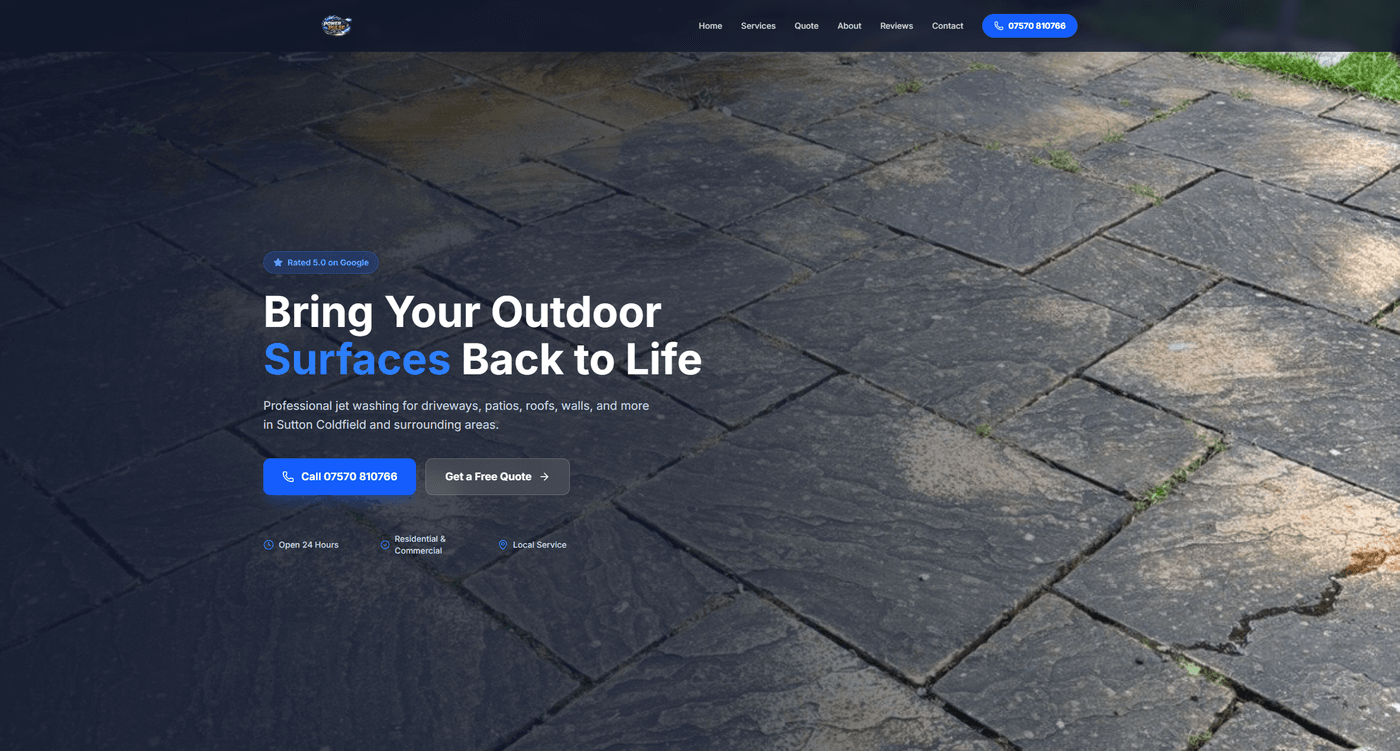
Power Pulse Solutions is a jet washing and pressure washing business serving residential and commercial clients. The brief was practical: a site that converts local searches into enquiries and communicates professionalism to potential customers who are comparing options.
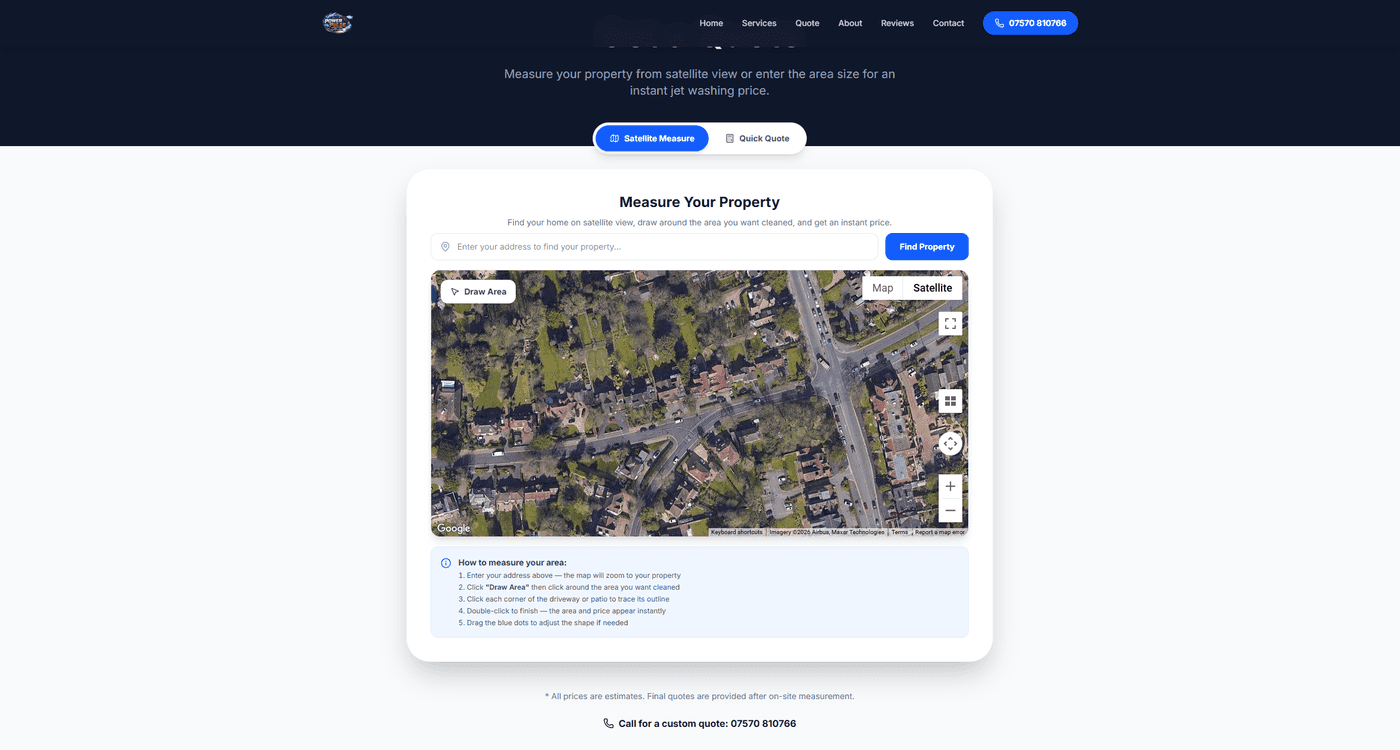
We built a fast, mobile-first website in Next.js with a hero section that states exactly what they do and where, dedicated pages for their key services (driveways, patios, commercial spaces), a visible phone number on every page, and a quote request form that respects the visitor's time.
The result is a site that works the way a tradesperson's marketing should: quietly, consistently, around the clock, bringing in enquiries from people already looking for what they offer.
Your Google Business Profile Works Alongside Your Website
One thing worth doing at the same time as a website rebuild is setting up and optimising your Google Business Profile. This is the listing that appears in Google Maps and in the local results pack when someone searches for tradespeople in a specific area.
A complete Business Profile with accurate service areas, photos of completed work, and a regular flow of reviews significantly increases your visibility in local searches. Your website and your Google profile work together: the profile captures attention in the map results, and your website adds the depth and credibility that converts the click into a call.
The Businesses Getting the Most Work Are Not Always the Best
There are tradespeople in every area doing exceptional work with almost no online presence. Their phone rings when a past customer recommends them and goes quiet in between.
Their competitors, sometimes doing average work, show up consistently in local searches, have a clean website with their contact details front and centre, and a Google profile full of recent reviews. They win the enquiry before the comparison ever begins.
The work you do should be the reason clients come back and recommend you. The reason they find you in the first place is almost always the website.
Pricing Transparency Helps
One thing many tradespeople avoid putting online is any indication of their pricing. That hesitancy is understandable: every job is different, and committing to numbers publicly feels risky.
But visitors who cannot find any pricing information often assume the worst. A brief note on your site, such as callout charges starting from a specific amount, or the fact that you provide free quotes, reduces the friction of getting in touch. It signals transparency, which builds trust before you have even spoken.
Even a simple "get a free quote in 24 hours" with a form removes the barrier for people who are comparing options and not quite ready to call.
Want More Local Enquiries From Your Website?
If you are a tradesperson looking to get more from your online presence, or looking to build a site that consistently generates local work, talk to us. We have built local business sites that deliver consistent enquiries and we know what makes them convert.
Start with a free discovery call. No pressure, no jargon, just a straight conversation about what your site needs to do and what that looks like in practice.